Showing posts with label politics. Show all posts
Showing posts with label politics. Show all posts
Sunday, July 27, 2014


Wednesday, April 2, 2014
Ariel Dorfman, Armand Mattelart, How to Read Donald Duck: Imperialist Ideology in the Disney Comic

Ariel Dorfman, Armand Mattelart, How to Read Donald Duck: Imperialist Ideology in the Disney Comic
Formats Available
Friday, October 4, 2013

Saturday, August 24, 2013
Samir Amin, Beyond US Hegemony?: Assessing the Prospects for a Multipolar World

Formats Available
Wednesday, July 10, 2013
Ranabir Samaddar, Emergence of the Political Subject

"This book is on the political subject, the conditions of its emergence, and the theoretical implications of this emergence, particularly the implications for our history. It seeks to change the way in which we understand our modern political history and the way in which it inquires into life, truth, and collective existence. The book not only marks by dense contentions different and varying histories of turbulent political moments in modern Indian history, but also presents a startling picture of the emergence of the political subject, which has been repeatedly sought to be brought under submission, but has repeatedly emerged as a mark of autonomy and agency in life."
Formats Available
PDF (Link 1)
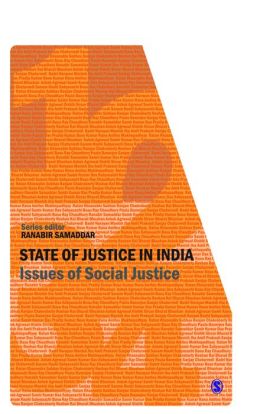
State of Justice In India: Issues of Social Justice
From Amazon,
"This set presents a comprehensive analytical study of the state of social justice in India. The four volumes undertake theoretical and empirical inquiry into the various spheres of justice, collectively creating what can be termed a report card of the regime of social justice in the country. Authored by some of the finest ethnographers and analysts in the country, this work approaches the issue of justice in the broader context of post-colonial democracy, and look at the limits within which democracy permits justice, social justice in particular."
Formats Available
PDF (Link 1)
The Politics Of Autonomy: Indian Experiences

Formats Available
PDF (Link 1)
"This volume tells us that a critical inquiry into the idea of autonomy suggests that the politics of the future will be the politics of autonomies: an engagement that combines notions like self-government, women`s autonomy, devolution of power, the rights of minorities, greater popular access to resources, and legal pluralism, and where different autonomies must learn to negotiate and co-exist. Viewing democratic theory through the lens of autonomy, the contributors:
- argue that autonomy has to be an essential ingredient in the building of post-colonial democracies, not merely a residual measure to keep some constituencies happy;
- draw attention to the contending principles of autonomy, the consequent politics of autonomies, the inescapable co-existence of autonomies, and the need for dialogue; and
- analyze the instructive Indian politico-historical experience because of its diversity and range, the extent of colonial institutionalization, multiple forms of autonomy, the complex path of constitutionalism, a wide variety of accords, and the unyielding state that is determined to keep the nation intact.
In the process, the contributors traverse a wide range of issues relating to women`s autonomy, peace accords, the nature of federalism in the Indian Constitution, autonomy in international law, and the fiscal decentralization. These debates are then supported by case studies on the autonomy experiments in Kashmir, Darjeeling, and the entire Northeast, and on fiscal devolution."
Sunday, July 7, 2013
Michael Parenti, Against Empire

PDF (LINK)Richly informed and written in an engaging style, Michael Parenti’s Against Empire exposes the ruthless agenda and hidden costs of the U.S. empire. Documenting the pretexts and the lies used to justify violent intervention and maldevelopment abroad, he demonstrates how the conversion to a global economy is a victory of finance capital over democracy.
Scribd (LINK)
As much of the world suffers unspeakable misery, and as the Third-Worldization of the Unites States accelerates, civil society is impoverished by policies that benefit the rich and powerful transnational corporations and the national security state. The empire feeds off the resources of the republic, and the hard-won gains made by ordinary people are swept away.
The history of imperialism is also, however, a history of resistance, struggle, and achievement;Against Empire offers compelling alternatives for progressive change.
Contents
- Imperialism 101
An introduction to the process by which political and economic domination is achieved.
- Imperial Domination (Updated)Poverty and maldevelopment: the products of present day U.S. imperialism.
- Intervention: Whose Gain? Whose Pain?
The winners and losers of empire building.
- Strong Empire, Weak Republic
Ways that Americans pay the hidden costs of empire.
- A Dreadful Success
How U.S. leaders adroitly prevent the public from seeing how their policies succeed in serving the favored few.
- Drugs, Lies and Video Wars
More contrived justifications for violent U.S. intervention abroad.
- Worthy Causes
A critical look at three pretexts for U.S. military intervention: launching humanitarian missions, establishing electoral democracies, and discouraging weapons proliferation.
- Democratic Governance vs The State
How capitialist state interests undermine and defeat genuine democracy.
- Voodoo Economics: The Third-Worldization of America
How the deceptions perpetuated by our leaders to advance the interests of empire abroad are duplicated at home.
- The Empire in Academia
A close look at the discriminatory treatment anti-capitalist scholars receive at the university.
- Real Alternatives
Precise, rational ways to transform public policy to build democratic institutions.
Friday, June 21, 2013
Michel Foucault, Security, Territory, Population (Lectures at the College de France: 1977-1978)
.jpg)
Formats Available
Excerpt:
We tried to show what the problems were that this “police” had to address; the extent to which the role it was assigned was different from the role that is later given to the institution of the police; and what was expected of it in ensuring the state’s growth in terms of two objectives: to enable it to stake out and improve its position in the game of rivalries and competition between European states, and to guarantee internal order through the “welfare” of individuals. Development of the state of (military-economic) competition, and development of the Wohlfahrt state (of wealth-tranquility-happiness): these are the two principles that “police” as a rational art of government must be able to coordinate. At this time “police” was conceived of as a sort [of] “technology of state forces.”
—Translated by Graham Burchell
Spectacular Times
.jpg)
.jpg)

David Graeber, Debt: The First 5,000 Years

David Graeber, Debt: The First 5,000 YearsNote: Updated with new .EPUB link.
Formats Available
.EPUB
NOTE: An obvious must-read for any serious thinker.
Sunday, June 2, 2013
James Erickson: Political Economy Illustrated, 1958

Cartoon/comic Marxist analysis of the critique of political economy during the Mccarthyist area.
Formats Available:
Saturday, May 25, 2013
Joseph Stalin Collected Works, volume one to twelve:
Collected Works Volume 1
Collected Works Volume 2
Collected Works Volume 3
Collected Works Volume 4
Collected Works Volume 5
Collected Works Volume 6
Collected Works Volume 7
Collected Works Volume 8
Collected Works Volume 9
Collected Works Volume 10
Collected Works Volume 11
Collected works Volume 12
Collected Works Volume 2
Collected Works Volume 3
Collected Works Volume 4
Collected Works Volume 5
Collected Works Volume 6
Collected Works Volume 7
Collected Works Volume 8
Collected Works Volume 9
Collected Works Volume 10
Collected Works Volume 11
Collected works Volume 12
'€œTheory is the experience of the working-class movement in all countries taken in its general aspect. Of course, theory becomes purposeless if it is not connected with revolutionary practice, just as practice gropes in the dark if its path is not illumined by revolutionary theory. But theory can become a tremendous force in the working-class movement if it is built up in indissoluble connection with revolutionary practice; for theory, and theory alone, can give the movement confidence, the power of orientation, and an understanding of the inner relation of surrounding events; for it, and it alone, can help practice to realise not only how and in which direction classes are moving at the present time, but also how and in which direction they will move in the near future.'€
Sunday, May 19, 2013
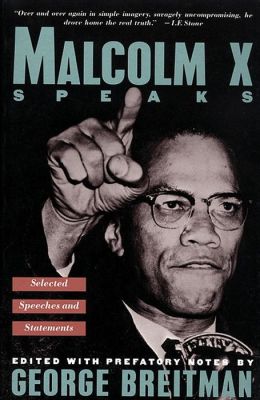
Malcolm X Speaks: Selected Speeches and Writings
Malcolm X Speaks: Selected Speeches and Writings
We are living in an era of revolution, and the revolt of the American Negro is part of the rebellion against oppression and colonialism which has characterized this era….It is incorrect to classify the revolt of the Negro as simply a racial conflict of Black against white, or as a purely American problem. Rather, we are today seeing a global rebellion of the oppressed against the oppressor, the exploited against the exploiter”
— Malcolm X, 1965
Happy Birthday Malcolm X!
Saturday, May 18, 2013
.jpg)
.jpg)
Felix Guattari, Chaosophy: Texts and Interviews 1972-1977
.jpg)
Felix Guattari, Chaosophy: Texts and Interviews 1972-1977
Formats Available
—Guattari, “Everybody Wants to be a Fascist”
Erving Goffman, The Presentation of Self in Everyday Life
.jpg)
Erving Goffman, The Presentation of Self in Everyday Life
Formats Available
Read Online
Subscribe to:
Posts (Atom)