Showing posts with label constitution. Show all posts

Wednesday, July 10, 2013

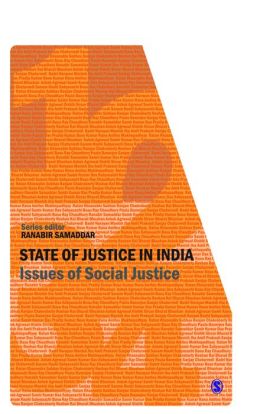
State of Justice In India: Issues of Social Justice


From Amazon,

"This set presents a comprehensive analytical study of the state of social justice in India. The four volumes undertake theoretical and empirical inquiry into the various spheres of justice, collectively creating what can be termed a report card of the regime of social justice in the country. Authored by some of the finest ethnographers and analysts in the country, this work approaches the issue of justice in the broader context of post-colonial democracy, and look at the limits within which democracy permits justice, social justice in particular."


Formats Available

PDF (Link 1)

The Politics Of Autonomy: Indian Experiences

Formats Available
PDF (Link 1)

From Snapdeal.co.in,
"This volume tells us that a critical inquiry into the idea of autonomy suggests that the politics of the future will be the politics of autonomies: an engagement that combines notions like self-government, women`s autonomy, devolution of power, the rights of minorities, greater popular access to resources, and legal pluralism, and where different autonomies must learn to negotiate and co-exist. Viewing democratic theory through the lens of autonomy, the contributors:
- argue that autonomy has to be an essential ingredient in the building of post-colonial democracies, not merely a residual measure to keep some constituencies happy;
- draw attention to the contending principles of autonomy, the consequent politics of autonomies, the inescapable co-existence of autonomies, and the need for dialogue; and
- analyze the instructive Indian politico-historical experience because of its diversity and range, the extent of colonial institutionalization, multiple forms of autonomy, the complex path of constitutionalism, a wide variety of accords, and the unyielding state that is determined to keep the nation intact. 
In the process, the contributors traverse a wide range of issues relating to women`s autonomy, peace accords, the nature of federalism in the Indian Constitution, autonomy in international law, and the fiscal decentralization. These debates are then supported by case studies on the autonomy experiments in Kashmir, Darjeeling, and the entire Northeast, and on fiscal devolution."