Showing posts with label neoliberalism. Show all posts

Sunday, July 27, 2014

Maurizio Lazzarato, The Making of the Indebted Man

Formats Available:
.PDF
"Debt—both public debt and private debt—has become a major concern of economic and political leaders. In The Making of the Indebted Man, Maurizio Lazzarato shows that, far from being a threat to the capitalist economy, debt lies at the very core of the neoliberal project. Through a reading of Karl Marx’s lesser-known youthful writings on John Mill, and a rereading of writings by Friedrich Nietzsche, Gilles Deleuze, Félix Guattari, and Michel Foucault, Lazzarato demonstrates that debt is above all a political construction, and that the creditor/debtor relation is the fundamental social relation of Western societies.

How do we extricate ourselves from this impossible situation? How do we escape the neoliberal condition of the indebted man? Lazzarato argues that we will have to recognize that there is no simple technical, economic, or financial solution. We must instead radically challenge the fundamental social relation structuring capitalism: the system of debt."  

Saturday, March 8, 2014

Nancy Fraser, Fortunes of Feminism: From Women's Liberation to Identity Politics to Anti-Capitalism


Nancy Fraser, Fortunes of Feminism: From Women's Liberation to Identity Politics to Anti-Capitalism

Formats Available
.PDF
Nancy Fraser’s major new book traces the feminist movement’s evolution since the 1970s and anticipates a new—radical and egalitarian—phase of feminist thought and action.During the ferment of the New Left, “Second Wave” feminism emerged as a struggle for women’s liberation and took its place alongside other radical movements that were questioning core features of capitalist society. But feminism’s subsequent immersion in identity politics coincided with a decline in its utopian energies and the rise of neoliberalism. Now, foreseeing a revival in the movement, Fraser argues for a reinvigorated feminist radicalism able to address the global economic crisis. Feminism can be a force working in concert with other egalitarian movements in the struggle to bring the economy under democratic control, while building on the visionary potential of the earlier waves of women’s liberation. This powerful new account is set to become a landmark of feminist thought.

Wednesday, July 10, 2013

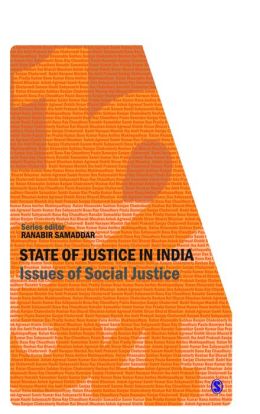
State of Justice In India: Issues of Social Justice


From Amazon,

"This set presents a comprehensive analytical study of the state of social justice in India. The four volumes undertake theoretical and empirical inquiry into the various spheres of justice, collectively creating what can be termed a report card of the regime of social justice in the country. Authored by some of the finest ethnographers and analysts in the country, this work approaches the issue of justice in the broader context of post-colonial democracy, and look at the limits within which democracy permits justice, social justice in particular."


Formats Available

PDF (Link 1)

Thursday, June 27, 2013

Cihan Tugal, Passive Revolution: Absorbing the Islamic Challenge to Capitalism

Formats Available

PDF (LINK 1)
PDF (LINK 2)

From Stanford University Press,

"Over the last decade, pious Muslims all over the world have gone through contradictory transformations. Though public attention commonly rests on the turn toward violence, this book's stories of transformation to "moderate Islam" in a previously radical district in Istanbul exemplify another experience. 

In a shift away from distrust of the state to partial secularization, Islamists in Turkey transitioned through a process of absorption into existing power structures. With rich descriptions of life in the district of Sultanbeyli, this unique work investigates how religious activists organized, how authorities defeated them, and how the emergent pro-state Justice and Development Party incorporated them. 

As Tugal reveals, the absorption of a radical movement was not simply the foregone conclusion of an inevitable world-historical trend but an outcome of contingent struggles. With a closing comparative look at Egypt and Iran, the book situates the Turkish case in a broad historical context and discusses why Islamic politics have not been similarly integrated into secular capitalism elsewhere." 

Friday, June 21, 2013

Michel Feher, Self-Appreciation; or, The Aspirations of Human Capital (2009)

Michel Feher, Self-Appreciation; or, The Aspirations of Human Capital (2009)

Read Online
MUST-READ: As early as the second half of the nineteenth century, socialist movements largely adopted the Marxist critique of the notion of the free laborer, according to which free laborers are alienated in two senses: they are alienated insofar as they do not have control over their life (i.e., they are denied the ability to choose their activity, while both the means of production and the outcome of their labor belong to others), but they are also alienated insofar as liberal law and ideology rob them of the consciousness of their exploitation (since they are invited to consider themselves as owners of their labor power and thus as subjects endowed with a freedom that is equivalent to that of their employer). However, as mentioned above, socialists did not merely recognize and expose the fictitious and ideological character of the freedom granted to the free worker: they also seized on this construct, both in an effort to bolster the price of labor power (through the work of labor unions) and to criticize working conditions (for violating the essential distinction between man and commodity, between the laborer in his or her inalienable dignity and the labor power that he or she owns and rents out).

This dual way of appropriating the figure of the free worker has allowed the labor movement to achieve considerable victories, compounded in the advent and development of the welfare state in its various dimensions. However, in the past three decades, claims based on class interests (e.g., demands for better wages and better job security) or humanist appeals (e.g., “we are not commodities”) have become less and less successful. Though this evolution, which is distinctive of the neoliberal era, can be read in terms of the crisis of the Fordist socioeconomic compact and its impact on the bargaining power of labor vis-à-vis capital, my contention is that it also reflects the decline of the type of free laborer and its gradual replacement by a new form of subjectivity: human capital. Indeed, as I shall argue, the rise of human capital as a dominant subjective form is a defining feature of neoliberalism.

Sunday, June 2, 2013

Yildiz Atasoy, Islam's Marriage with Neo-Liberalism: State Transformation in Turkey


Yildiz Atasoy, Islam's Marriage with Neo-Liberalism: State Transformation in Turkey

Formats Available
.PDF
The transformation of the Turkish state is examined here in the context of globalized frames of neo-liberal capitalism and contemporary schemas of Islamic politics. It shows how the historical emergence of two distinct yet intertwined imaginaries of state structuring, laiklik and Islam, continues to influence Turkish politics today.

Yildiz Atasoy, Turkey, Islamists and Democracy: Transition and Globalisation in a Muslim State


Yildiz Atasoy, Turkey, Islamists and Democracy: Transition and Globalisation in a Muslim State

Formats Available
.PDF
This book examines Islam's engagement with the reorganization of the global economy. By examining the incorporation of Islam into the existing relations of the Turkish state from the late Ottoman Empire to the present day, the author demonstrates how political Islam interacts with the global restructuring of classes, states and political actors. Atasoy challenges the view of Islamist politics as an anti-Modern, anti-Western force that is fundamentally opposed to the global economy and instead argues that political Islam is cosmopolitan and embedded in processes which incorporate Western modernity into local cultural practices.

Saturday, May 11, 2013

Capitalist Superheroes Caped Crusaders in the Neoliberal Age


Capitalist Superheroes: Caped Crusaders in the Neoliberal Age by Dan Hassler-Forest (.mobi)
Download here: http://www.sendspace.com/file/vfh2iz
'€œIn the same way that Stallone and Schwarzenegger played film heroes who came to embody the values of Ronald Reagans aggressive conservative agenda in the 1980s, the 21st-century film narratives of Batman, Spider-Man and Superman reflect the policies of the Bush Doctrine after 9/11. This book offers a groundbreaking study of the relationship that exists between post-9/11 American politics and the contemporary superhero movie phenomenon. No other Hollywood subgenre was as consistently popular during the George W. Bush presidency, as films such as Spider-Man, Superman Returns, Iron Man, and The Dark Knight embodied the key contradictions that inform the cultural and political life of the post-9/11 years. By combining in-depth analyses of numerous major superhero films from this era with astute readings of contemporary critical theory, this book offers accessible and academically potent insight into the complex interplay between politics, ideology, and entertainment in the 21st century.'€ (x)

Wednesday, May 8, 2013

Marc Bousquet, How the University Works: Higher Education and the Low-Wage Nation


Marc Bousquet, How the University Works: Higher Education and the Low-Wage Nation

Formats Available
.PDF
Excerpt from The Waste Product of Graduate Education:
The core of any redescription of the linkage between graduate education and the system of academic labor more generally has to begin by discarding the Fordist assumption that the situation of the doctoral degree holder can be grasped by a manufacturing analogy to production. Under casualization, it makes very little sense to view the graduate student as potentially a product for the job market: most graduate students are already laboring at the only academic job they’ll ever have. (Hence the importance for organized graduate student labor of inscribing the designation “graduate employee” in law and discourse.) From this standpoint, it has to be acknowledged that increasingly the holders of the doctoral degree are not so much the products of the graduate employee labor system as its by-products, insofar as that that labor system exists primarily to recruit, train, supervise, and legitimate the employment of nondegreed rather than degreed teachers. This is not to say that the system doesn’t produce and employ holders of the PhD, only that this operation has become secondary to its extraction of teaching labor from nondegreed persons, primarily graduate employees and former graduate employees now working as adjunct labor—as part-timers, full-time lecturers, postdocs, and so on. This essay argues that the organized graduate employee has a better description. Against the dominant second-wave heuristic of the “job market,” and as a corrective to the lapsed and too-often residual labor knowledge of the first wave of faculty unionism, a third wave of thinking about academic labor is emergent in the graduate employee union movement. While this emergent knowledge is based in the particular experience of casualization by two generations of graduate employees and former graduate employees, I hope in the next few pages to suggest that it is not only a better knowledge of the “local” circumstance of the graduate employee (because how can the graduate employee be localized, exactly? Every other “location” in the system, from perma-temp to university president, is filled by someone who has been a graduate employee) but, further, that this third wave is an emergent better knowledge of the labor system as a totality. Consistent with the insights of psychoanalytic Marxism, it is in the graduate employees’ character as incipient by-products, their understanding that the system’s constant pressure is not toward their incorporation but toward compelling their recognition that they must serve as the system’s indigestible remainder, that provides the partial standpoint from which we can most usefully and justly accept a description of the whole.
OTHER ESSAYS:
Excerpt from the “Informal Economy”:
One of the reasons that graduate employees are so vocal is becausethe transformation of graduate education accomplished by the three-decade conversion of the university to a center of capital accumulation needs to be viewed as a profound form of ‘employer sabotage’—most graduate employees find that their doctorate does not represent the beginning but instead the end of a long teaching career: as I’ve observed in another venue, the ‘award’ of the doctoral degree increasingly represents a disqualification from teaching for someone who has already been teaching for a decade or more. In the course of re-imagining the graduate student as a source of informationalized labor, the academy has increasingly evacuated the professional-certification component of the doctoral degree (the degree plays a key role in the way professionals maintain a monopoly on professional labor; however, now that work formerly done by persons holding the degree is done by persons studying for the degree, the degree itself no longer represents entrance into the profession). The consequence of this evacuation is that the old Fordist sense of the doctoral recipient as the ‘product’ of graduate education has little meaning—instead, the degree holder must now be understood in systemic terms as the waste product of graduate education—not merely ‘disposable,’ but that which must be disposed of for the constantly-churning system of continuously-replaced student labor to function properly.
As much as we think we know about the modern university, very little has been said about what it’s like to work there. Instead of the high-wage, high-profit world of knowledge work, most campus employees—including the vast majority of faculty—really work in the low-wage, low-profit sphere of the service economy. Tenure-track positions are at an all-time low, with adjuncts and graduate students teaching the majority of courses. This super-exploited corps of disposable workers commonly earn fewer than $16,000 annually, without benefits, teaching as many as eight classes per year. Even undergraduates are being exploited as a low-cost, disposable workforce.
Marc Bousquet, a major figure in the academic labor movement, exposes the seamy underbelly of higher education—a world where faculty, graduate students, and undergraduates work long hours for fast-food wages. Assessing the costs of higher education’s corporatization on faculty and students at every level, How the University Works is urgent reading for anyone interested in the fate of the university. From page 21:
Under casualization [of academic labor], it makes very little sense to view the graduate student as potentially a “product” for a “market” in tenure-track jobs. For many graduate employees, the receipt of a Ph.D. signifies the end, and not the beginning, of a long teaching career. Most graduate students are already laboring at the only academic job they’ll ever have – hence, the importance for organized graduate student labor of inscribing the designation “graduate employee” in law and discourse.
From the standpoint of the organized graduate employee, the situation is clear. Increasingly, the holders of a doctoral degree are not so the products of the graduate-employee labor system as its by-products, insofar as that labor system exists primarily to recruit, train, supervise, and legitimate the employment of nondegreed students and contingent faculty.
As Andrew Ross (author of the highly-recommend “Mental Labor Problem” essay) puts it:
[T]he research university is behaving more and more like an adjunct to private industry in the “concentration of power upward into managerial bureaucracies, the abdication of research and productivity assessment to external assessors and funders … the pressure to adopt an entrepreneurial career mentality, and the erosion of tenure through the galloping casualization of the work force.
This is probably extremely relevant to a good portion of this blog’s followers and may prove a welcome eye-opener.

A Collection of David Harvey

Sunday, May 5, 2013

V.I. Lenin, The State and Revolution


V.I. Lenin, The State and Revolution
Formats Available

Formats Available:
PDF 1
PDF 2
Definitely read his review on Jacobin Magazine before reading this!
Excellent Marxist critique of postcolonial theory and the Subaltern Studies!
In addition, read Chibber’s marvelous essay “On The Decline Of Class Analysis In South Asian Studies”
In addition, read Terry Eagleton’s outstanding critique of Spivak’s ‘post-colonial reason’ here.
A provocative intellectual assault on the Subalternists’ foundational work.
Postcolonial theory has become enormously influential as a framework for understanding the Global South. It is also a school of thought popular because of its rejection of the supposedly universalizing categories of the Enlightenment.
In this devastating critique, mounted on behalf of the radical Enlightenment tradition, Vivek Chibber offers the most comprehensive response yet to postcolonial theory. Focusing on the hugely popular Subaltern Studies project, Chibber shows that its foundational arguments are based on a series of analytical and historical misapprehensions. He demonstrates that it is possible to affirm a universalizing theory without succumbing to Eurocentrism or reductionism.
Postcolonial Theory and the Specter of Capital promises to be a historical milestone in contemporary social theory.

Review

“With its focus on cultural identities and mixtures, postcolonial theory ignored the larger context of capitalist relations and thus limited its scope to Western academia where it excelled in the game of growing and profiting from the liberal guilt feeling. Chibber’s book simply sets the record straight, bringing postcolonialism down from cultural heights to where it belongs, into the very heart of global capitalist processes. The book we were all waiting for, a burst of fresh air dispelling the stale aroma of pseudo-radical academic establishment.” (Slavoj Žižek) “In this scrupulous and perceptive analysis, Vivek Chibber successfully shows that the ‘universalizing categories of Enlightenment thought’ emerge unscathed from the criticisms of postcolonial theorists. He shows further that—perhaps ironically—Subaltern Studies greatly underestimates the role of subaltern agency in bringing about the transformations that they attribute to the European bourgeoisie. Chibber’s analysis also provides a very valuable account of the actual historical sociology of modern European development, of Indian peasant mobilization and activism, and much else. It is a very significant contribution.” (Noam Chomsky )
“In this outstanding work—a model of clarity in its architecture and argumentation—key theorists of the ‘Subaltern’ and of postcoloniality have met their most formidable interlocutor and critic yet. Chibber’s critique of postcolonial theory and the historical sociological studies associated with it is, at the same time, a vigorous and welcome defense of the enduring value of certain Enlightenment universals as an analytical framework to both understand and radically change the world we live in” (Achin Vanaik )
“Vivek Chibber has written a stunning critique of postcolonial theory as represented by the Subaltern Studies school. While eschewing all polemics, he shows that their project is undermined by their paradoxical acceptance of an essentially liberal-Whig interpretation of the bourgeois revolutions and capitalist development in the West, which provides the foundation for their fundamental assertion of the difference of the East. Through a series of painstaking empirical and conceptual studies Chibber proceeds to overturn the central pillars of the Subalternists’ framework, while sustaining the credibility of Enlightenment theories. It is a bravura performance that cannot help but shake up our intellectual and political landscape.” (Robert Brenner )
“Postcolonial Theory and the Specter of Capital is a must-read book for students of comparative politics and social theory. Vivek Chibber presents a forceful challenge to the Subaltern Studies school and to postcolonial theory more broadly. Arguing with great clarity, Chibber raises fundamental objections to their ideas about capitalism, power, and agency, and presents an alternative account of these ideas. Most fundamentally, he rejects the fundamental division between ‘East and West’ associated with postcolonial theory and defends the ‘universalizing categories of Enlightenment thought.’ This is a major contribution that is bound to reshape debate on these important issues.” (Joshua Cohen )
“In this book, Vivek Chibber has carried out a thoroughgoing dissection of Subaltern Studies. Like a highly skilled anatomist, he lays bare the skeleton, the nervous system, the arteries and veins of this school … In the process the reader is also exposed to the nitty-gritty of a materialist historiography.” (Amiya Kumar Bagchi )

About the Author

Vivek Chibber is Associate Professor of Sociology at New York University. He has contributed to, among others, the Socialist Register, American Journal of Sociology, Boston Review and New Left Review. His book Locked in Place: State-Building and Late Industrialization in India won the 2005 Barrington Moore Book Award and was one of Choice‘s Outstanding Academic Titles of 2004.


Ultimate ‘Reading Capital’ Post
Reading Capital by Louis Althusser:
Read Online // Download PDF // Download Kindle pack
Reading Capital Politically by Harry Cleaver:
Read Online // Download PDF
Representing Capital: A Reading of Volume One by Fredric Jameson:
Download PDF
Companion to Marx’s Capital by David Harvey:
Download PDF // Video Lectures // For Kindle (.mobi)
Marx’s Capital, Philosophy and Political Economy by Geoff Pilling:
Read Online // For Kindle (.mobi)
“To understand Capital, and therefore its first volume, it is necessary to take up ‘proletarian class positions’, i.e. to adopt the only viewpoint which makes visible the reality of the exploitation of wage labour power, which constitutes the whole of capitalism.
This is, proportionately speaking, on condition that they struggle against the influence of the burden of bourgeois and petty-bourgeois ideology that they carry, relatively easy for workers. As ‘by nature’ they have a ‘class instinct’ formed by the harsh school of daily exploitation, all they need is a supplementary political and theoretical education in order to understand objectively what they feel subjectively, instinctively. Capital gives them this supplementary theoretical education in the form of objective explanations and proofs, which helps them to move from a proletarian class instinct to an (objective) proletarian class position.” (L. A.) (x)

Introduction to this blog

Ebookcollective was a tumblr blog that was designated to distribute free leftist-related ebooks to educate the left in regards to theory. In many cases, the blog ended up helping lower-middle class students, who couldn't afford to buy these books or were afraid of possible malware or viruses when trying to find the book. It was also an intellectual center, a center where people learned about theory and were introduced with books that might enlighten them. Overall, it was a collective area and an example of socialist theory in work. Yes, it might be the internet, but the website was an example of socialism in work—with the end of privatization of leftist literature and a path towards creating class-conscious workers. With the fact that the capitalist atmosphere dominates the Tumblr site and the corporate minds behind the staff, it was deleted for “copyright infringement”, even though most of the published texts were hundred years old (which allows the text to be distributed publicly).

Tumblr staff has a record of not responding to the harassment tumblr users received on a regular basis, but quickly responds to the interest of the corporate welfare or for the bourgeoisie’s interest. It’s logically simple because of their interest in capitalist accumulation.

Even if the founders of the blog were Leninists (Trotskyists), all ebooks—whether it be anarchist to Maoist were allowed. As the blog expanded, other leftists—who were Maoists, anarchists, etc., contributed to the blog. Even if we disagreed vastly with the theories, it was a collective site where people were given the option to uphold whatever they pleased.

But if the founders were Trotskyists, why would they give permission to uphold ebooks that were against the Leninist foundations? It’s not like the founders necessarily agreed with the theories, but rather they remembered what Lenin said in <i>What is to be Done?</i>, “Without any revolutionary theory, there cannot be any revolutionary practice”. Even as Bolshevik-Leninists, we must be enlightened and be well-versed in all theories, so that we can prove continuously for its erroneous mistakes—like what Marx, Engles, Lenin and Trotsky did. Lenin said famously in <em>The Three Sources and Three Components of Marxism</em>, “The Marxist doctrine is omnipotent because it is true”. Of course it is! However, as Marxists, we must prove that it is true, and why it is true with dialectical materialist analysis. We can’t arrogantly say that it is true without backing up with a materialist analysis. We wouldn’t be even considered Marxists, but a petty-bourgeois leftist who blabbers more than reads!

We want to create an anti-capitalist atmosphere by giving access to workers free ebooks. In reality, people can’t really afford to buy Das Kapital from their local bookstore or end up receiving a fine from the library for an overdue Das Kapital! We must understand that the bourgeoisie has privatized education as such that it’s only accessible for the bourgeoisie, which leaves the proletariat ignorant, hence adapting the philistine culture of capitalism. Not all workers were born with Engels’ Principles of Communism attached to their backs! Class-consciousness is not something tangible, where it can be inserted in one’s brain, but it’s a self-identity the proletariat must find—reading being one of the options.

This blog is not to create a reflection of the successful attempt to create a centralized location of leftist literature, but to further expand our blog. As of now, there is an Ebookcollective in Farsi and in Bengali—thanks to our Persian and Bengali comrades. By, allowing comrades to participate and contribute, regardless of the theory, is a step forward to a socialist revolution and democratic centralism in praxis.

As for many, Ebookcollective was an attempt in universaling free leftist literature—but don’t give up on the site yet! There are and will be several attempts in creating the new one. As of now, we have moved to blogspot, where we expect not to violate any bourgeois perspective of copyright infringement.

The neoliberal cult that has actively suppressed numerous of sites that have been dedicated to distributing media exemplifies the contradictions of capitalism. Of course, we Marxists are well-versed with the concept of M-C-M’ and how it is being applied to the printing/publishing press; we understand the whole vulgar concept that ‘the authors are workers—rather being mental workers than physical’. But then we must realize that authors are being extracted surplus value for the capitalists to accumulate capital. One of the absurdities of capitalism include the fact that not paying for the commodity (books) but rather than ‘stealing it online’ is a violation. What people neglect is that the writers are being paid less not because it’s free online, but the corporate profit over the surplus value produced in writing it. With the bourgeois democracy in taken, illegitimate laws are formed to defend the corporate—creating the allusion that it’s the author’s rights.

Nevertheless, our struggle to create a centralized location for leftist literature will continue and it will be always on the proletariat side!

If you are interested in contributing to the blog, please email us at <a href="mailto:ebookcollective@gmail.com">ebookcollective@gmail.com</a> as of now. We will soon find an option for open submission. Thank you.