Showing posts with label lacan. Show all posts

Saturday, May 18, 2013

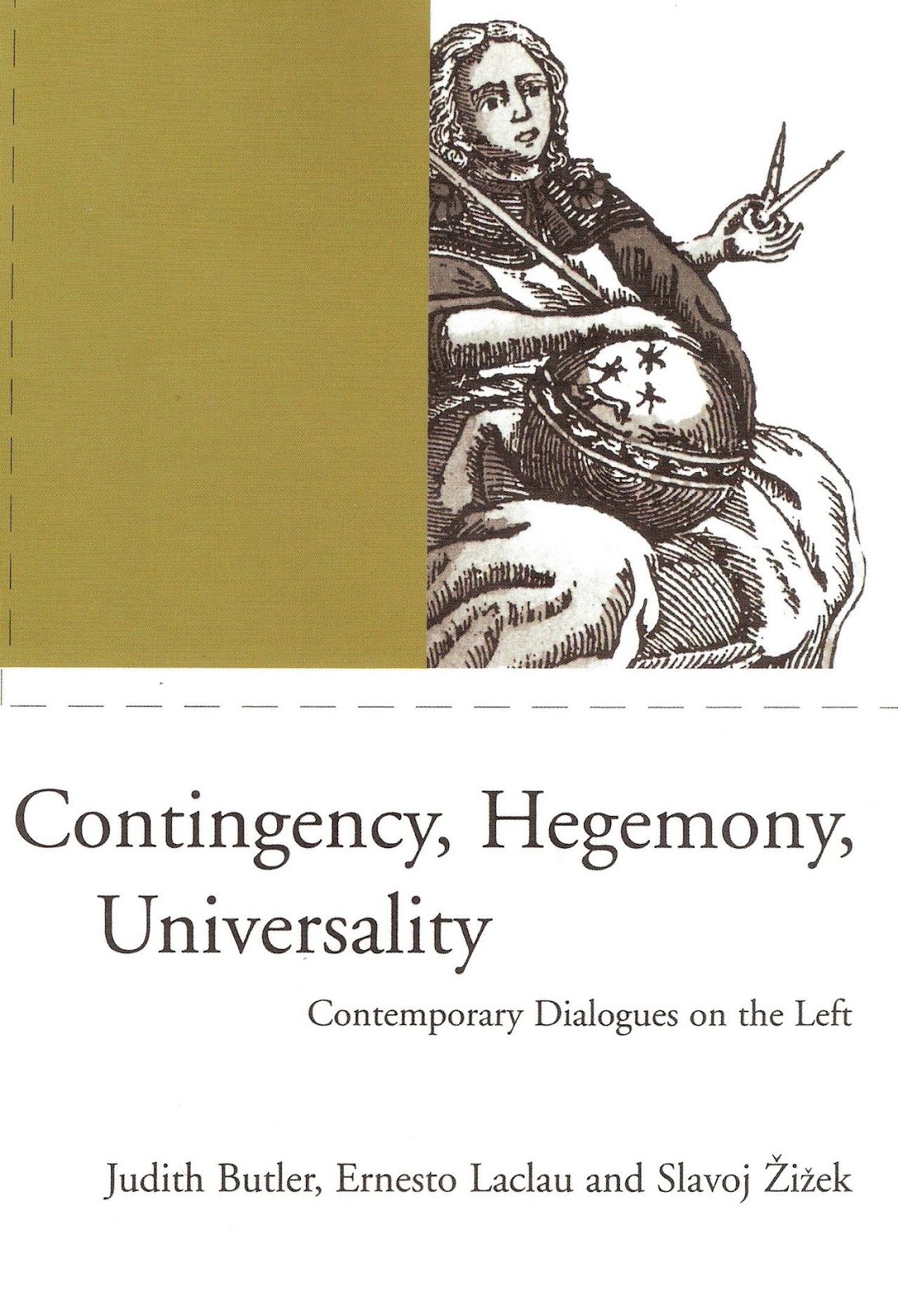
Judith Butler, Ernesto Laclau, Slavoj Žižek, Contigency, Hegemony, Universality: Contemporary Dialogues on the Left


Judith Butler, Ernesto Laclau, Slavoj Žižek, Contigency, Hegemony, Universality: Contemporary Dialogues on the Left
Formats Available
.PDF
What is the contemporary legacy of Gramsci’s notion of Hegemony? How can universality be reformulated now that its spurious versions have been so thoroughly criticized? In this ground-breaking project, Judith Butler, Ernesto Laclau and Slavoj Zizek engage in a dialogue on central questions of contemporary philosophy and politics. Their essays, organized as separate contributions that respond to one another, range over the Hegelian legacy in contemporary critical theory, the theoretical dilemmas of multiculturalism, the universalism-versus-particularism debate, the strategies of the Left in a globalized economy, and the relative merits of post-structuralism and Lacanian psychoanalysis for a critical social theory. While the rigor and intelligence with which these writers approach their work is formidable, Contingency, Hegemony, Universality benefits additionally from their clear sense of energy and enjoyment in a revealing and often unpredictable exchange.
Wednesday, May 8, 2013

Slavoj Žižek, Violence: Six Sideways Reflections (2008)


Slavoj Žižek, Violence: Six Sideways Reflections (2008)

Formats Available
.PDF
In this provocative and brilliantly argued work, philosopher Zizek takes readers on an intellectual and artistic tour—drawing upon Picasso’sGuernica, Alfred Hitchcock and M. Night Shyamalan’s films, Michel Houellebecq’s novels, jokes, Lacanian psychology and a Kantian analysis of Hurricane Katrina—to demonstrate how societies understand, obscure and deny the sources of violence. His is not an examination of offenses but an argument that violence can perhaps be best defined by the bystanders and not by its perpetrators or victims. Zizek enumerates the varieties of violence (subjective, objective, systemic) and how it inheres in language, economics and religion, urging readers to discern the violence that sustains our very efforts to fight violence and to promote tolerance. In meditations on the events of 9/11, the Abu Ghraib scandal and the 2005 Paris riots, the book turns numerous familiar arguments on their ear (he proposes that the guards at Abu Ghraib represent the true underside of American society). His unrelenting scrutiny and host of cultural and literary references dazzle, and this bracing and rewarding read will challenge anyone unwilling to recognize his or her complicity in systems of institutional and interpersonal violence.

Tuesday, May 7, 2013

Slavoj Zizek, First As Tragedy, Then As Farce (2009)


Slavoj Zizek, First As Tragedy, Then As Farce (2009)

Formats Available

.PDF
From the tragedy of 9/11 to the farce of the financial meltdown.Billions of dollars have been hastily poured into the global banking system in a frantic attempt at financial stabilization. So why has it not been possible to bring the same forces to bear in addressing world poverty and environmental crisis? In this take-no-prisoners analysis, Slavoj Zizek frames the moral failures of the modern world in terms of the epoch-making events of the first decade of this century. What he finds is the old one-two punch of history: the jab of tragedy, the right hook of farce. In the attacks of 9/11 and the global credit crunch, liberalism dies twice: as a political doctrine and as an economic theory. First as Tragedy, Then as Farce is a call for the Left to reinvent itself in the light of our desperate historical situation. The time for liberal, moralistic blackmail is over.