Showing posts with label Sigmund Freud. Show all posts

Sunday, August 31, 2014

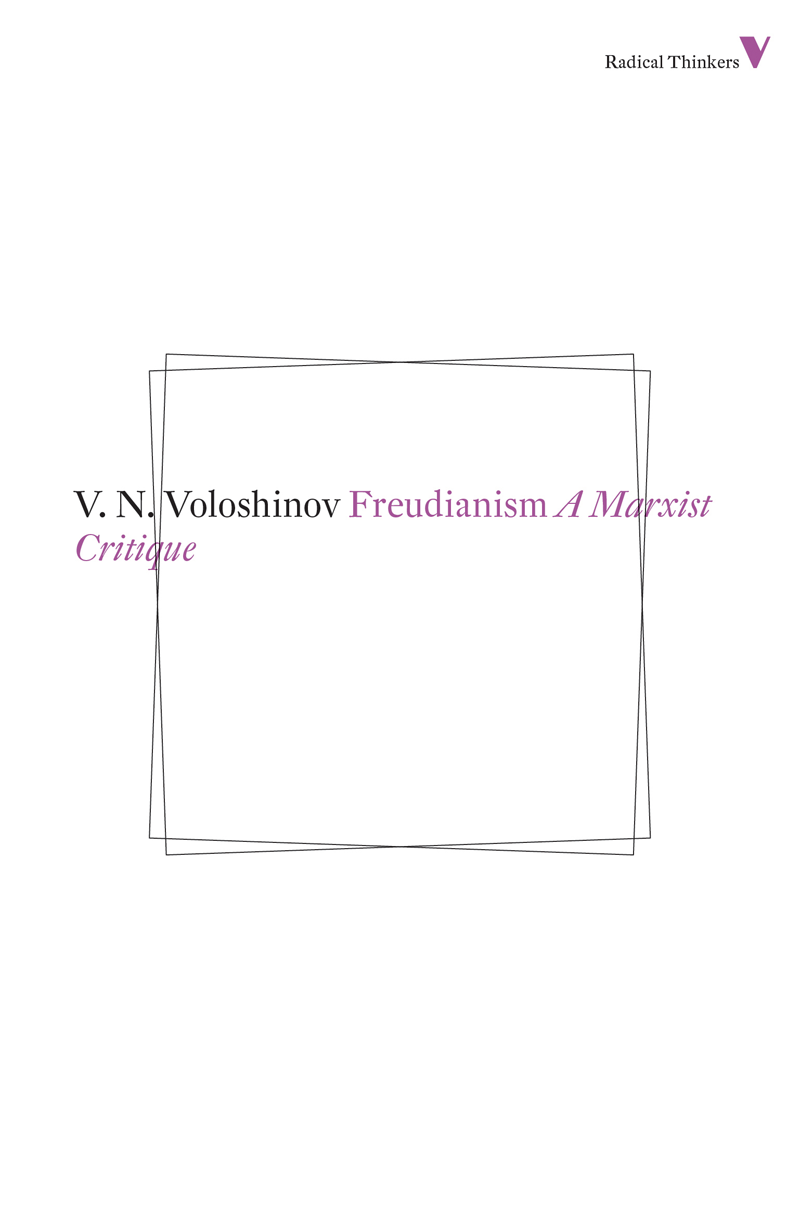
Valentin Voloshinov, Freudianism: A Marxist Critique

Valentin Voloshinov, Freudianism: A Marxist Critique

Formats Available
.PDF
Freudianism is a major icon in the history of ideas, independently rich and suggestive today both for psychoanalysis and for theories of language. It offers critical insights whose recognition demands a change in the manner in which the fundamental principles of both psychoanalysis and linguistic theory are understood. Volosinov went to the root of Freud's theory adn method, arguing that what is for him the central concept of psychoanalysis, "the unconscious," was a fiction. He argued that the phenomena that were taken by Freud as evidence for "the unconscious" constituted instead an aspect of "the conscious," albeit one with a person's "official conscious."


For Volosinov, "the conscious" was a monologue, a use of language, "inner speech" as he called it. As such, the conscious participated in all of the properties of language, particularly, for Volosinov, its social essence. This type of argumentation stood behind Volosinov's charge that Freudianism presented humans in an inherently false, individualistic, asocial, and ahistorical setting.
Wednesday, May 8, 2013

Sigmund Freud, Beyond the Pleasure Principle


Sigmund Freud, Beyond the Pleasure Principle

Formats Available
.PDF
In 1915 at the University of Vienna 60-year-old Sigmund Freud delivered these lectures on psychoanalysis, pointing to the interplay of unconscious and conscious forces within individual psyches. In reasoned progression he outlined core psychoanalytic concepts, such as repression, free association and libido. Of the various English translations of Freud's major works to appear in his lifetime, only one was authorized by Freud himself: The Standard Edition of the Complete Psychological Works of Sigmund Freud under the general editorship of James Strachey. Freud approved the overall editorial plan, specific renderings of key words and phrases, and the addition of valuable notes, from bibliographical and explanatory. Many of the translations were done by Strachey himself; the rest were prepared under his supervision. The result was to place the Standard Edition in a position of unquestioned supremacy over all other existing versions.Newly designed in a uniform format, each new paperback in the Standard Edition opens with a biographical essay on Freud's life and work —along with a note on the individual volume—by Peter Gay, Sterling Professor of History at Yale.